
Finland and Sweden supply around 16% of the world's wood and paper products. About 325,000…
March 4, 2026
Spare part management for agricultural machinery
Managing the lifespan of agricultural equipment is a critical part of running a successful farm. With harvest unpredictability increasing, machines must be ready to work at a moment’s notice. 50% of machinery downtime is caused by part failures, and 55% of these are affected by spare parts availability.
That’s why a strategic approach to spare parts management for agricultural machinery is so important. Having spare parts on hand is a must, and this means having the right spare parts in stock, ready to go. By ensuring you have a reliable system for inventory, you can protect farming operations from costly disruptions, ensuring farmers can maintain production and profitability. If you work in the agricultural sector, here’s what you can do to improve spare parts management and speed up the repair times of your customers’ equipment.

Why is spare parts management crucial for agriculture?
Reduces downtime and increases productivity
When a machine breaks down, the resulting downtime can severely impact production, especially during peak seasons. Poor spare parts management can lead to extended downtime as farmers wait for replacement components to be delivered.
A solid system for your inventory enables quick repairs, helping them get back to work faster. This approach to minimising downtime is key to enhanced productivity and ensures they are not left waiting for the necessary parts to be available.
Simplifies the ordering process
With a firm grasp on your inventory management, ordering replacement parts becomes a much simpler and more organised process. Proper inventory tracking allows you to see what you have, where it is, and even forecast demand for common spare parts. This helps you avoid running out of stock at a critical time, streamlining the entire repair and maintenance workflow on farms.
Improves maintenance during the off-season
The off-season is the ideal time for scheduled equipment maintenance. This is where an effective spare parts management system really proves its value. Accurate stock levels and regular audits ensure you have all the spare parts your customers need in stock for planned services.
This proactive approach helps you identify potential problems with parts availability before they lead to a major breakdown during the busy season, causing a disruption to time-sensitive seasonal tasks.
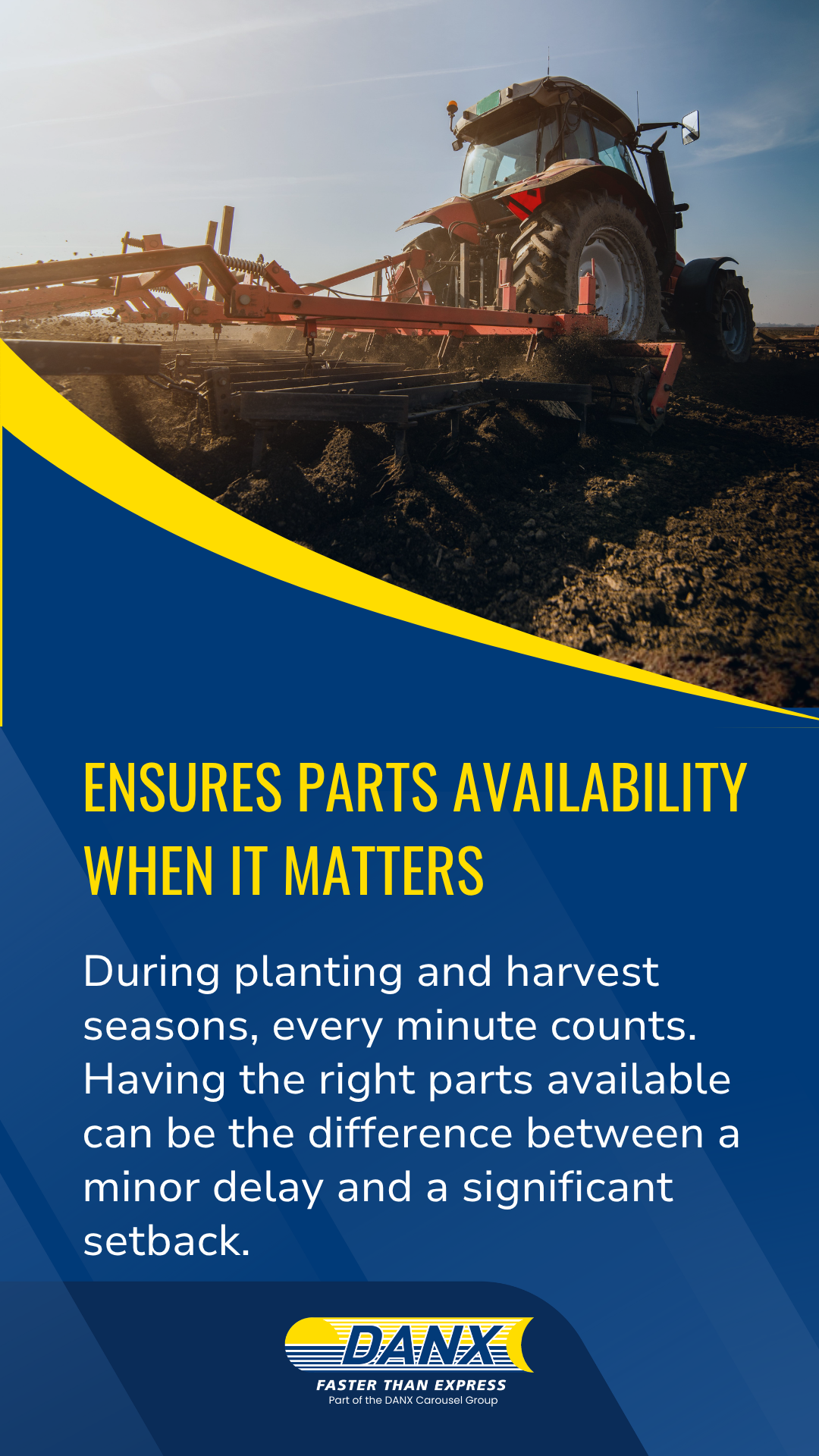
Ensures parts availability when it matters
During planting and harvest seasons, every minute counts. Having the right parts available keeps farming equipment running in peak seasons and can be the difference between a minor delay and a significant setback.
When standard parts take 8 to 16 weeks to be delivered, and engineered-to-order parts may take up to a year, this can leave critical farming equipment out of action for much longer than farms can afford.
A robust system for your spare parts inventory ensures your customers have critical components and other spare parts ready to go. In areas like the Nordics, Baltics and Poland, where farms are in some of the remotest areas in the country, forward stock locations can be used to ensure that your stock is as close as possible to where it needs to be should emergency repairs be required.
Improves efficiency during harvest
Every minute of the day during harvest season demands speed and efficiency. Weather windows may only be open for a few days, so waiting for parts simply isn’t an option.
An effective spare parts management system ensures machines are in top condition. If a machine breaks down, having the right spare parts inventory on hand allows your technicians to get to site and perform repairs quickly. This keeps farming operations moving and prevents costly downtime.
The right inventory management systems for spare parts
What does a strong system for managing spare parts inventory look like? It’s about more than just a spreadsheet. It’s about having a clear process in place to manage your spare parts. Here are some tips:
Regular audits
Routinely checking your stock levels is crucial. Regular audits help you keep track of your spare parts inventory so you know exactly what you have and what you’re missing. This prevents poor planning and helps you maintain the right stock levels.
Inventory tracking
Whether you use a simple app or a sophisticated inventory management system, inventory tracking is essential. It helps you categorise parts based on their use, so you can easily identify certain parts and manage your inventory more efficiently.
Failure rate analysis
By analysing which spare parts tend to break most often, you can forecast demand and ensure you have the necessary parts on hand. This is a powerful tool for minimising downtime and improving overall efficiency.
Lead times
Knowing the lead time for specific spare parts is vital. If a component has a long lead time, you need to ensure you order it well in advance to prevent delays. To manage your inventory effectively, you must always be aware of lead times.
Critical components
Identify the critical components for your most important equipment and keep a close eye on their stock levels. These are the components your customers can’t afford to be without, so ensure you have a plan to replace them as soon as possible.
Putting spare parts management into practice
DeLaval faced a significant challenge in providing timely service for broken milking equipment, which is critical for both production and animal welfare. Delays could negatively impact the health of cows and cause financial losses for farmers. DeLaval’s previous logistics model, which involved technicians carrying their own stock, was inefficient and resulted in customer dissatisfaction.
DANX solved this by creating a highly optimised, night-delivery logistics solution. Technicians can order parts before 5 p.m., which DANX then transports overnight from a main warehouse in Germany to Vantaa, Finland. From there, the parts are delivered directly to the technician’s van by 7 a.m. the next morning. This system significantly reduced DeLaval’s inventory costs, increased machinery uptime, and drastically improved customer satisfaction.
Managing spare parts inventory starts with a solid supply chain
Ultimately, a successful strategy for managing spare parts inventory requires preparation, but even the best plan can fail if your supply chain isn’t reliable. This is where we come in.
At DANX, we specialise in time-critical logistics for agricultural machinery and spare parts. Our service ensures your spare parts get to your customers quickly and reliably. You can focus on your operations, while we get your parts where they need to be. We work with you, your dealers and technicians to streamline the delivery process. Please get in touch to discuss creating an effective inventory management process for your spare parts.
Related Posts